

Introduction
Beyond the coastal cities and oases lies the vast, silent expanse of the desert, a domain historically ruled by powerful Bedouin tribes whose lives were dictated by the rhythms of the seasons and the search for water and pasture. Among the most prominent of these were the Awamir and the Manasir. These tribes, with their deep knowledge of the Empty Quarter (Rub’ al Khali), embodied the quintessential Bedouin spirit of independence, resilience, and intricate social organization. Their stories, often overlooked in coastal-centric histories, are vital to understanding the complete cultural and human geography of the UAE.
Lords of the Empty Quarter: Masters of Desert Navigation
The Awamir and Manasir were true children of the desert, their territories spanning the immense dunes of the Liwa area and deep into the Empty Quarter. Their survival depended on an encyclopedic knowledge of this harsh environment. They could read the stars for navigation, identify desert plants with medicinal value, and, most critically, they knew the location of every hidden well (bir) and seasonal rain pool (khabra). This knowledge was a closely guarded tribal secret, passed down through generations. The Awamir, in particular, were famed as guides (dalils), their expertise essential for any caravan attempting to cross the treacherous sands of the Empty Quarter.
The Camel Economy: Mobility and Status
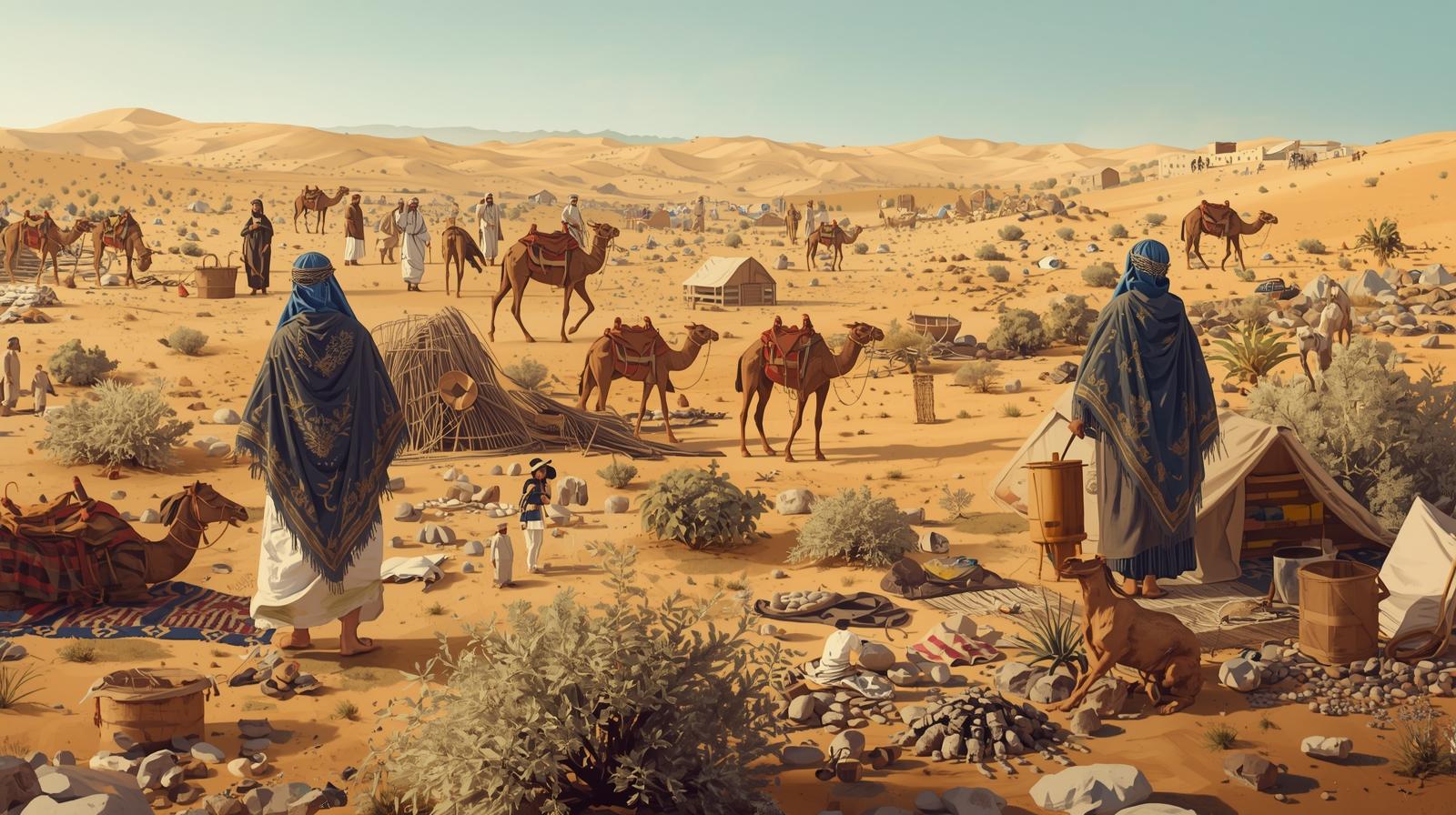
The bedrock of their society was the camel. For the Awamir and Manasir, camels were not just livestock; they were transportation, a source of milk and meat, a form of currency, and a measure of a family’s wealth and status. The tribes practiced a pattern of transhumance, a seasonal migration following the sporadic rains that brought forth patches of desert grass (ashib). Their renowned camel-breeding skills produced animals prized for their endurance and strength, capable of surviving long journeys with minimal water. This mobility was their greatest asset, allowing them to exploit scarce resources across a vast territory.
Tribal Structure and Inter-Tribal Relations
Like the Bani Yas, the Awamir and Manasir were confederations of smaller clans and families. Loyalty was first to one’s immediate family, then to the clan, and finally to the tribe as a whole. Their social structure was fluid and adapted to the demands of nomadic life. Relations between the Awamir, Manasir, and other tribes like the Bani Yas were complex, characterized by both cooperation and competition over precious resources. Alliances shifted, and conflicts over grazing rights or water sources were not uncommon. However, these were governed by a strict Bedouin customary law (urf), and disputes were often settled through mediation by respected elders.
The Impact of the Oil Era and Settlement
The discovery of oil and the subsequent formation of the UAE brought the most significant change to the ancient way of life for the Awamir and Manasir. The government of Sheikh Zayed, who himself had deep ties and understanding of the Bedouin, initiated a policy of settlement. The provision of modern housing, healthcare, and education in new towns in the Al Dhafra region (like Madinat Zayed) offered a seductive alternative to the hardships of the desert. While many embraced these opportunities, the transition was profound. The knowledge of desert navigation became less critical, and the full-scale nomadic lifestyle gradually faded.
Conclusion: The Keepers of Desert Wisdom
While the era of full nomadism has passed, the legacy of the Awamir and Manasir remains deeply respected in the UAE. They are remembered as the keepers of the desert’s wisdom, the embodiment of the values of courage, hospitality, and self-reliance that form the core of the national character. Many of their descendants still maintain a deep connection to the desert, owning camels and returning to the dunes for recreation and spiritual solace. The story of the Awamir and Manasir is a reminder that the soul of the UAE was forged not only on the coast but also in the silent, majestic vastness of the desert, by a people whose resilience and deep connection to the land helped shape the nation’s identity.